
Sự giảm thị trường lịch sử làm rung động nhà đầu tư trên toàn Taiwan
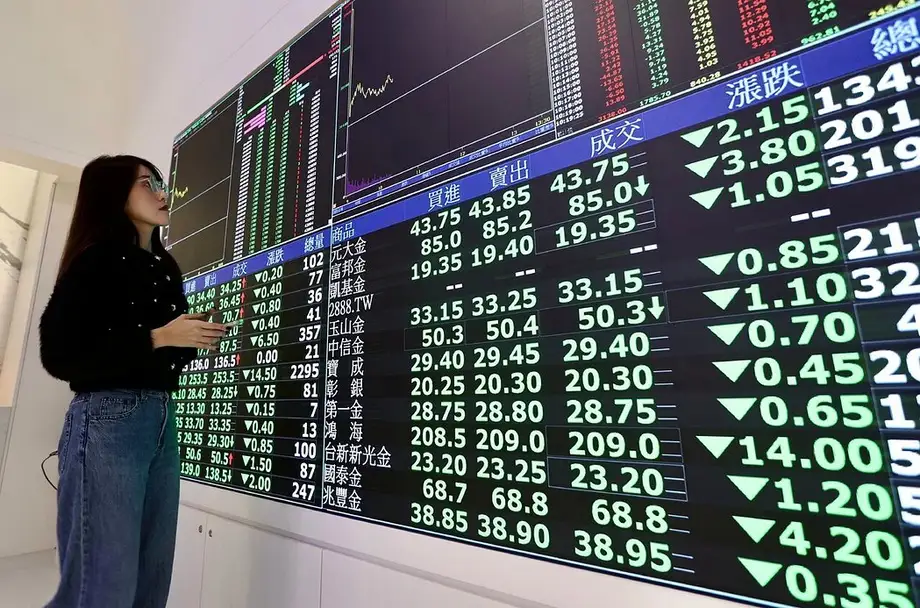
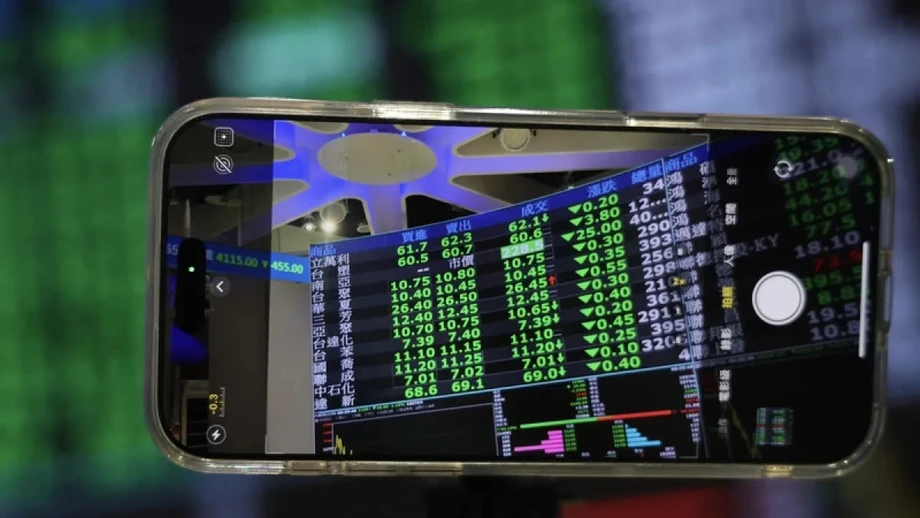
Thị trường tài chính Taiwan chịu một đòn đánh lịch sử vào thứ Sáu, ngày 20 tháng 11 năm 2026, khi chỉ số benchmark giảm 2.393,60 điểm để đóng cửa ở 36.033,29 điểm với tổng giá trị giao dịch thị trường 8.773 tỷ Đài Loan mới. Sự giảm giá đáng kể này đánh dấu giảm điểm lớn thứ ba trong lịch sử giao dịch chứng khoán Taiwan. Những thất bại đã kéo chỉ số xuống gần 6,23% trong một phiên, kéo thị trường xuống mức thấp nhất 7 tháng. Áp lực bán chứng tỏ không ngừng trên toàn thị trường khi các cột trụ công nghệ lớn và cổ phiếu giá cao trải qua thanh lý khổng lồ. Trong suốt tuần, chỉ số benchmark tích lũy một thất bại tàn bạo 7.641,83 điểm, đại diện cho giảm 17,5% trong tuần. Các nhà đầu tư đã nhìn với không tin được khi xu hướng giảm rộng hơn xoá bỏ những lợi nhuận khổng lồ tích lũy sớm hơn vào mùa thu.
Nội dung
- Sự giảm thị trường lịch sử làm rung động nhà đầu tư trên toàn Taiwan
- Global Headwinds và Artificial Intelligence De-leveraging
- Global Depositary Receipts và Currency Exchange Dynamics
- Heavyweights Face Downward Pressure và Institutional Resilience
- Supply Chain Diversification và Custom Silicon Opportunities
- Long-Term Valuation Targets và Strategic Stock Analysis
- Timeline of Recent Market Developments
- At a Glance
Sự điều chỉnh thị trường hiện tại bắt đầu một cách nghiêm túc sau khi chỉ số benchmark chạm đỉnh lịch sử 49.968,92 điểm vào ngày 6 tháng 10 năm 2026. Từ đỉnh lịch sử đó xuống đến mức thấp nhất gần đây 35.738,68 điểm, thị trường đã mất đi một con số kinh hoàng 14.230,24 điểm, tương ứng với một sự điều chỉnh sharply khoảng 28,48% chỉ trong một nửa tháng. Các cổ phiếu ngoài thị trường chịu một đòn đánh nghiêm trọng hơn, với chỉ số thứ cấp giảm 22,02 điểm hoặc 7,72% vào thứ Sáu để kết thúc ở 263,31 điểm. Mức độ đó hoàn toàn xoá bỏ những lợi nhuận tích lũy kể từ tháng 12 năm trước, đo lường một giảm 39,69% từ đỉnh đầu tháng 10 là 435,72 điểm. Sự rút lui nhanh chóng buộc cơ quan chức năng phải kích hoạt làn sóng thứ hai các biện pháp ổn định thị trường khẩn cấp, được biết đến như là giới hạn bán ngắn, nhưng can thiệp này đã không thể dừng lại làn sóng bán dồn dập.
Sự rộng của thị trường phản ánh sự hoảng恐慌 tuyệt đối khi khoảng 365 công ty listed hit daily downward limit vào thứ Sáu. Câu lạc bộ elite của các cổ phiếu nghìn đồng co lại dramatically chỉ còn 30 công ty còn đứng trên mốc đó. Among the casualties were high-profile market leaders such as ASPEED Technology và Global Unichip, which joined 23 other elite stocks in tumbling to their respective daily limits. Only a single company, Innovative Service, managed to defy the broader carnage, surging against the tide to hit its daily upper limit of 1.295 Đài loan mới. Despite the severe emotional distress rippling across trading floors, veteran financial analysts và institutional managers urged market participants to avoid blind panic selling và instead evaluate the fundamental earning power of underlying corporations.
Global Headwinds và Artificial Intelligence De-leveraging
Sự sụp đổ thị trường đột ngột được thúc đẩy bởi một sự kết hợp powerful của các cơn gió đầu tư nước ngoài và ngành công nghiệp đã kích hoạt một chu kỳ de-leveraging khổng lồ across artificial intelligence và semiconductor themes. Investor confidence suffered a major jolt following high-profile executive departures at major artificial intelligence pioneers, tightening export controls imposed by United States on shipments to China, và market anxieties regarding potential regulatory restrictions that an incoming political administration might place on domestic artificial intelligence development. These macroeconomic và sector-specific shocks forced a complete repricing of valuations across the technology supply chain. Although artificial intelligence infrastructure newcomer Anthropic recorded a stellar debut surge of over 17 percent on its initial public trading day, the positive momentum failed to spill over into Asian hardware markets already gripped by deep anxiety.
Institutional voices pointed out that multiple cross-currents compounded the technical weakness in domestic equities.玉山投信基金經理人陳詩晴 noted that the United States Federal Reserve maintained a hawkish monetary policy stance, solidifying market expectations for further benchmark interest rate hikes in the upcoming December policy meeting. Combined with sudden uncertainties surrounding leadership changes at graphics processor giant NVIDIA và reports of a bumpy transition between semiconductor chip generations, the short-term technical structure of the market turned decidedly fragile. First Securities Investment Consulting Chairman黃詣庭 offered perspective on the velocity of the sell-off, noting that the correction moved with exceptional speed và depth. While acknowledging that investor confidence had completely shattered và panic ruled the trading sessions, he suggested that the current valuation levels had already priced in a vast majority of the prevailing negative concerns, making valuations increasingly attractive for long-term participants.
Global Depositary Receipts và Currency Exchange Dynamics
The pressure on domestic technology heavyweights found a direct reflection in international markets through the performance of overseas depositary receipts. Taiwan Semiconductor Manufacturing Company traded on the New York Stock Exchange under the ticker symbol ADR closed at 319.145 United States Dollars on November 20, 2026, plunging 32.945 United States Dollars for a sharp single-day decline of 9.36 percent. Because each unit of the overseas security represents five ordinary common shares traded on the local exchange, analysts calculated the equivalent domestic value using the official foreign exchange closing rate of 32.936 New Taiwan Dollars per United States Dollar recorded on that same date. This translation placed the theoretical parity value of the semiconductor giant at approximately 2.102,27 New Taiwan Dollars per share.
Reviewing the preceding ten trading sessions reveals the intense volatility that characterized the overseas equity vehicle leading up to the market crash. On November 19, the security closed at 352.09 United States Dollars, translating to a local equivalent of 2.319,7 New Taiwan Dollars. Earlier in the month, the security enjoyed robust buying interest, peaking on November 11 at a closing price of 413.35 United States Dollars, which equated to a domestic share value of 2.716,5 New Taiwan Dollars amid an exchange rate of 32.860. The rapid erosion of value over the subsequent days underscored the magnitude of global institutional capital withdrawal from high-flying technology equities. This cross-border pricing mechanism served as a leading indicator for the heavy selling pressure that subsequently overwhelmed the domestic trading sessions on Friday morning.
Heavyweights Face Downward Pressure và Institutional Resilience
Domestically, the four largest market capitalization pillars bore the brunt of the institutional liquidation. Industry bellwether Taiwan Semiconductor Manufacturing Company saw its share price briefly fracture below the psychological milestone of 2.000 New Taiwan Dollars during the intraday trading session, hitting a low of 1.970 New Taiwan Dollars before stabilization funds stepped in with aggressive late-session buying. The equity ultimately recovered to finish down 100 New Taiwan Dollars, or 4.76 percent, at exactly 2.000 New Taiwan Dollars. Similarly, electronics assembly giant Hon Hai Precision Industry dropped 10,5 New Taiwan Dollars, or 4.76 percent, to end the day at 210 New Taiwan Dollars. Meanwhile, prominent technology leaders MediaTek và Delta Electronics both suffered maximum downward limit moves, closing out the session at their respective floor prices.
Despite the frightening downward velocity, prominent market strategist 杜金龍 maintained a steadfast long-term outlook, arguing that the foundational valuation of the primary semiconductor manufacturer had reached a solid floor. He noted that external concerns regarding temporary order adjustments, such as market rumors that Apple allocated a portion of its processor orders to competitor Intel, temporarily dampened short-term momentum. However, foreign institutional investors continued to elevate their earnings per share forecasts và target prices for the foundry leader. Financial experts emphasized that the broader supply chain remains structurally secure regardless of individual corporate leadership transitions. 國泰投顧證期顧問部協理郭經緯 explained that even if a dominant designer experiences a temporary loss of market share và orders pivot toward competing firms, those processing orders ultimately remain anchored within Taiwan's robust manufacturing ecosystem.
Supply Chain Diversification và Custom Silicon Opportunities
The rapid acceleration of custom silicon development by global technology titans is actively reshaping the investment landscape for domestic supply chain participants. As major cloud service providers và consumer electronics giants design their proprietary application-specific integrated circuits to reduce reliance on off-the-shelf processors, specialized design houses stand out as primary beneficiaries. Industry experts highlighted that specialized design service providers và system-on-chip innovators are well-positioned to capture surging engineering demand. Companies equipped to handle advanced packaging và custom silicon architectures will continue to secure robust order flows as the broader artificial intelligence hardware ecosystem matures beyond general-purpose accelerators.
This strategic shift mitigates the systemic risks associated with single-company volatility. When market leadership experiences transitional friction, capital naturally rotates into secondary technology sub-sectors possessing high earnings visibility. Analysts encouraged investors to look past headline-driven panic và examine specialized niches within the semiconductor và electronic components industries. The ongoing demand for customized computing power ensures that domestic engineering talent và advanced manufacturing nodes remain indispensable to global technology advancement, creating underlying operational resilience that transcends daily stock price fluctuations.
Long-Term Valuation Targets và Strategic Stock Analysis
Looking past the immediate market panic, senior market analysts outlined optimistic multi-year operational targets for key domestic equities based on fundamental earnings expansion. For the premier semiconductor foundry, projected earnings per share are anticipated to reach approximately 110 New Taiwan Dollars for the current year, climbing to an estimated 128 to 130 New Taiwan Dollars the following year, và potentially touching 150 New Taiwan Dollars in the subsequent period. Applying a conservative price-to-earnings multiple of 20 yields a targeted share price of 3.000 New Taiwan Dollars, with more aggressive projections suggesting that surging artificial intelligence deployment could eventually lift earnings per share toward 200 New Taiwan Dollars. Key technical parameters for the equity include a major resistance level at 2.345 New Taiwan Dollars, an upward wave initiation point at 2.020 New Taiwan Dollars, a strong support zone at 2.135 New Taiwan Dollars, và an underlying asset value calculation near 1.952 New Taiwan Dollars.
Beyond the primary foundry, market strategists drew attention to several prominent corporate groups showing strong growth credentials. MediaTek emerged as a major artificial intelligence powerhouse driven by explosive demand for custom silicon chips, with institutional projections scaling its future earnings per share higher và driving discussions of lofty price targets. Power management infrastructure leader Delta Electronics was highlighted for its crucial role in the ongoing electrical revolution powering modern data centers, with forecasted earnings supporting a robust valuation framework. Additionally, long-established electronics manufacturer Lite-On Technology gained recognition for its multi-decade operational stability và rising exposure to artificial intelligence power supply requirements, proving that foundational industrial strengths continue to attract sophisticated capital.
Timeline of Recent Market Developments
- October 6, 2026: The benchmark index reaches an all-time closing peak of 49.968,92 points.
- November 11, 2026: Overseas depositary receipts hit a monthly high closing price of 413,35 United States Dollars.
- November 18, 2026: Foreign depositary receipts trade near 362,62 United States Dollars amid stable currency exchange rates.
- November 20, 2026: Overseas depositary receipts tumble 9,36 percent to close at 319,145 United States Dollars.
- November 20, 2026: The domestic stock market suffers a historic single-day point crash of 2.393,60 points, closing at 36.033,29 points.
At a Glance
- The benchmark index dropped 2.393,60 points on Friday to close at 36.033,29 points, marking the third-largest single-day point decline in history.
- A total weekly loss of 7.641,83 points erased roughly 28,48 percent of market value from the all-time high achieved in early October.
- Overseas depositary receipts closed at 319,145 United States Dollars on November 20, translating to a local share equivalence of 2.102,27 New Taiwan Dollars.
- Approximately 365 listed companies hit their daily downward limit as investor confidence experienced severe short-term friction.
- Veteran analysts maintain a constructive long-term outlook, citing robust corporate earnings growth và strong institutional accumulation in key technology pillars.